Menu

Call This Thursday Get $50 Off Today
24 Hour Services
7 Days a Week
Call This Thursday Get $50 Off Today
24 Hour Services
7 Days a Week

Calcium build up in hot water heater system is generally due to a mineral found in water called calcium carbonate. When this mineral precipitates out, it settles in the bottom of the tank. The water heater is designed in a way that it cannot control the sediments on its own. The dip tube which is the inlet of the cold water is usually straight on a majority of water heaters that are made today. This means that when the water strikes the bottom of the tank, it makes the sediment to settle uniformly on the bottom of the tank rather than making it gravitate to the drain pipe.
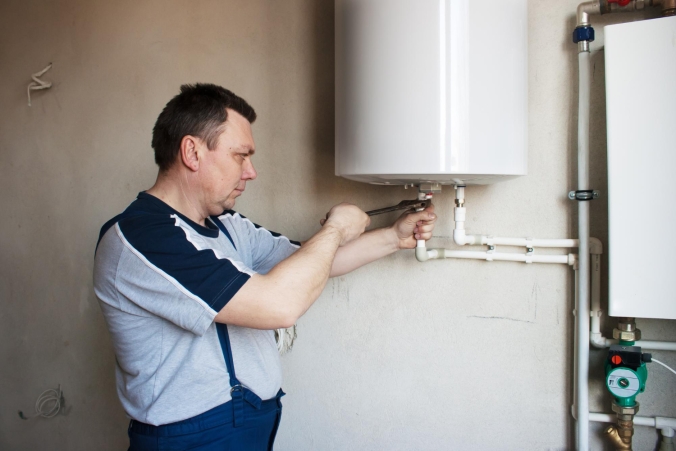
One of the major disadvantages of calcium build up in hot water heaters is the formation of a layer of insulation in the middle of the water and the gas burner. This sediment usually slows heat transfer thus causing the bottom of the tank to overheat. This overheating causes the steel to weaken damaging the glass lining. This can consequently reduce the ‘lifespan’ of the tank. In the case of the electrics, it buries the lower element, triggering it to burn out.
It also lowers the ability of the tank to conserve energy and creates a good environment for the growth of corrosive anaerobic bacteria. The sediments can also pass in the re-circulation lines, blocking the open check valves, causing the electric pump to stick till it burns out. Calcium build up can also clog the drain valve, preventing any water to flow and also cause the tank to produce some noise, which can sometimes be too loud and annoying.
Calcium carbonate is generally found in all treated water at room temperature. When water is stored in a tank and heated with a continuous flame, this mineral compound usually filters out and form hard particles at the bottom of the heater. Although calcium carbonate may not be harmful to humans, this buildup blocks the transfer of heat. The layer that usually builds up at the bottom of your heater makes the heater consume double the energy to get water to the required temperature.
The use of water softeners is one major solution to calcium buildup. When using these softeners, it is vital to check the sacrificial anode regularly, since these softeners can lead to the decrease of these sacrificial anode causing the heater to rust.
Flushing the hot water heater at least twice a year is another way to control this sedimentation. This flushing involves the draining of the heater to allow the removal of all the particles floating on the tank.
Calcium build up in hot water heater lowers the ability of your tank to conserve heat, and can also lead to the growth of harmful bacteria. This can be avoided by flushing your tank at least two times per year and by using water softeners.
Plumbing Services

Plumber in Pacific Palisades, CA

Plumbing Service Provider

A kitchen stays busy all day. When something slows down the flow of…

A good look inside a drain line tells you the truth faster than…

A sewer line problem interrupts daily life quickly. Rooter Guard sees this…

A plumbing system reaches a point where repairs stop making sense. Many homeowners…

A dead disposal can bring a busy kitchen to a stop. When that…
Water pressure can make or break your plumbing experience… almost literally. Low water pressure can make washing pots and pans a nightmare, and high water pressure can push water through joints and crevices before causing a burst pipe. Water pressure problems are sneaky and often start small, but they usually…
Learn More