Menu

Call This Thursday Get $50 Off Today
24 Hour Services
7 Days a Week
Call This Thursday Get $50 Off Today
24 Hour Services
7 Days a Week
High-density polyethylene (HDPE) is a versatile plastic made form petroleum which can be used for many applications and one of which is in plumbing. Also called polythene, this material can be used for water supply in domestic and agricultural purposes.
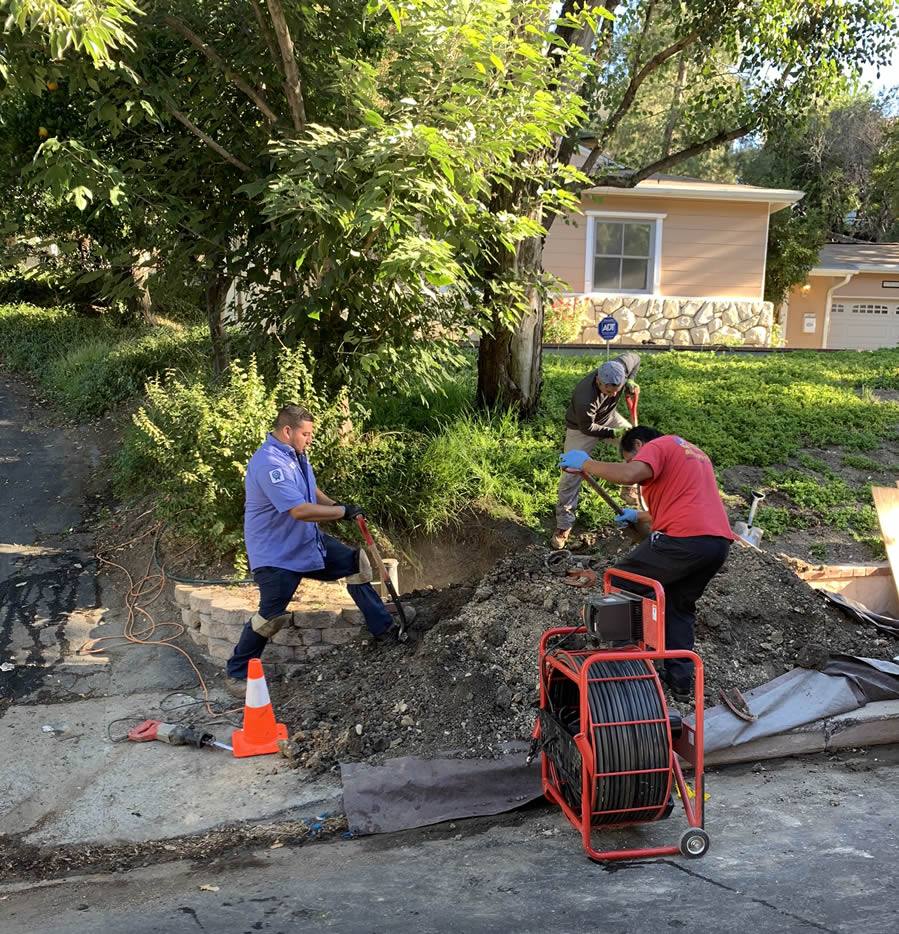
HDPE installation can be done in two ways. An option would be to dig a trench for pipe laying while an alternative is to use a commercial auger which will drill through the ground and at the same time pulls the pipe with it. The latter is recommended for situations where trenching might not be allowed or possible like in streets or driveways. Trench installation, on the other hand, is easier since there is no need to use joints.
It is important to evaluate the condition of the site as well as the subsurface before trench construction. Moreover, there should be a specific installation specification especially if the depth is deep and soil condition is not supportive of the pipe. For a pipe installation with 12” diameter PE pipe and a smaller PE pipe, trench width, length and depth should be taken into consideration.
Stability of the trench floor is important to support the bedding material and testing can be done by walking on the trench. If there are no visible footprints, this is a sign that the trench floor is already stable. For unstable trench floor, correct this by dewatering. However, if this is not possible, you can add crushed rocks. It is important to ensure that the trench floor is smooth and free of rocks, ridges, hollows and lumps. And remember that in the presence of boulders and rocks, removal is required.
It is important that tamped bedding material of about four to six inches be padded on the bottom of the trench. It should also be without sand, gravel or clayey sand.
HDPE pipe should be placed around 8” in diameter by hand. Equipment will only be used for moving, lifting and lowering since it should not be dropped, dumped, pusher or rolled into the trench.
To support the pipe into the trench, it should be embedded on the soil. To do this properly, embedment materials, which can include coarse grained soil such as sand or gravel and coarse grained soil which can contain clayey and silty sand, should be used. Conversely, for angular embedment, use shovel to slice and dump the crushed stone to be placed around the pipe. If the materials, however, are naturally occurring such as sand and mixtures with fines, they should be in lifts and should not exceed eight inches in thickness. After placement, they should be tamped with the use of a mechanical tamper.
After the HDPE pipe has been put in place, backfilling is the next step to do to keep the pipe from being out of line and protect it from external damage, among others. Backfill should be done under the pipe haunches to approximately 6 inches above the PE pipe. Lifts should be placed evenly at the sides of the pipe while ensuring there are no large, hard objects to hit the pipe. For the final backfill, there should be at least a foot of backfill cover over the pipe before compaction.
Plumbing Services

Contact

A kitchen stays busy all day. When something slows down the flow of…

A good look inside a drain line tells you the truth faster than…

A sewer line problem interrupts daily life quickly. Rooter Guard sees this…

A plumbing system reaches a point where repairs stop making sense. Many homeowners…

A dead disposal can bring a busy kitchen to a stop. When that…
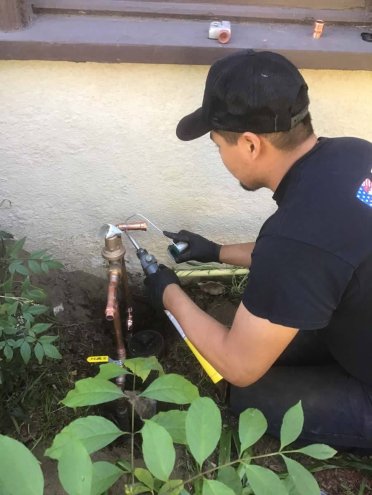
Water pressure can make or break your plumbing experience… almost literally. Low water pressure can make washing pots and pans a nightmare, and high water pressure can push water through joints and crevices before causing a burst pipe. Water pressure problems are sneaky and often start small, but they usually…
Learn More