Menu

Call This Friday Get $50 Off Today
24 Hour Services
7 Days a Week
Call This Friday Get $50 Off Today
24 Hour Services
7 Days a Week
Having a leaky garden hose connector can be a big hassle. For one thing, it can cause you to waste gallons of water, which can lead to a large utility bill. It can also make watering your plants more difficult, especially when the leak is too large and not enough water can reach the end of your hose. Of course, it can make your home and garden less environmentally friendly since you’re wasting earth’s precious natural resources.
Fortunately, if you find a leak in your garden hose connector, you can take several steps to fix it. These include:
The first thing you should do is to see if you’ve installed the hose correctly. It might seem unnecessary, but sometimes a leak is caused by a hose that’s not screwed on tightly. There’s no need to get a wrench; using one often results to over-tightening (which can lead to damaged hose parts) and, most of the time, tightening the connection by hand does the trick.
Inspect the threads in your hose, the connector, and the faucet and see if they’re clean. If they’re layered with dirt, they may not get a good seal since the grit can prevent them from fully connecting with each other. Give the threads a good clean and see if they still leak or not.
Another step you can take is to wrap the threads with plumber’s in Los Angeles, CA tape, which you can easily buy from your local hardware store. The tape will help the threads have a better seal and keep leaks at bay.
If you’ve cleaned and taped the threads but still notice a leak, the cause of the problem may be hose connector’s gasket. Leaks can happen if the gasket is missing or incorrectly installed or if it’s too old and worn out and no longer does its job right. With these in mind, check if the gasket is properly seated; if it’s not, make the necessary adjustments and see if it still leaks. If it does, it’s definitely the right time to replace it. Just find out what type of gasket your connector uses, buy a replacement from your favorite hardware, and install it in your connector.
If your connector uses a flat gasket, some experts say that it’s better to replace it with an O-ring instead of another flat one. It creates a better seal and helps you prevent leaks in the future.
You’ve installed a new gasket but the leak is still there. What to do now? Well, if this the case, the problem may lie in the hose end. Don’t worry since you can easily replace it; just head off to the hardware store and get a hose clamp and barb kit. Once you have it on hand, cut the end of your hose and attach the hose clamp to the new end. Lubricate the hose barb with some soap and push it into the hose end; once it’s securely in, connect the clamp to the barb and tighten it using a screwdriver.
Take these steps now to solve the leak in your garden hose connector!
Plumbing Service Provider

A kitchen stays busy all day. When something slows down the flow of…

A good look inside a drain line tells you the truth faster than…

A sewer line problem interrupts daily life quickly. Rooter Guard sees this…

A plumbing system reaches a point where repairs stop making sense. Many homeowners…

A dead disposal can bring a busy kitchen to a stop. When that…
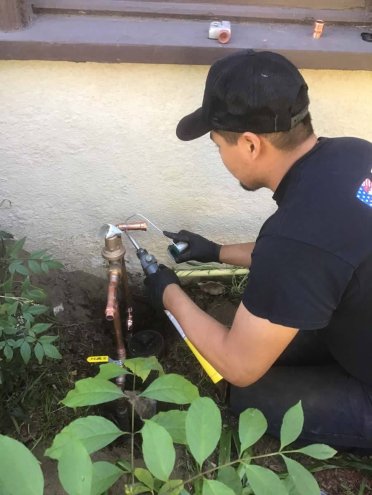
Water pressure can make or break your plumbing experience… almost literally. Low water pressure can make washing pots and pans a nightmare, and high water pressure can push water through joints and crevices before causing a burst pipe. Water pressure problems are sneaky and often start small, but they usually…
Learn More